← Back to the timeline
2003: Drought and the Okanagan Mountain Park firestorm
A severe province-wide drought and the worst Okanagan wildfire season to that point. The Okanagan Mountain Park fire destroyed hundreds of homes and forced tens of thousands to evacuate. 2003 became the low-inflow benchmark later droughts were measured against.
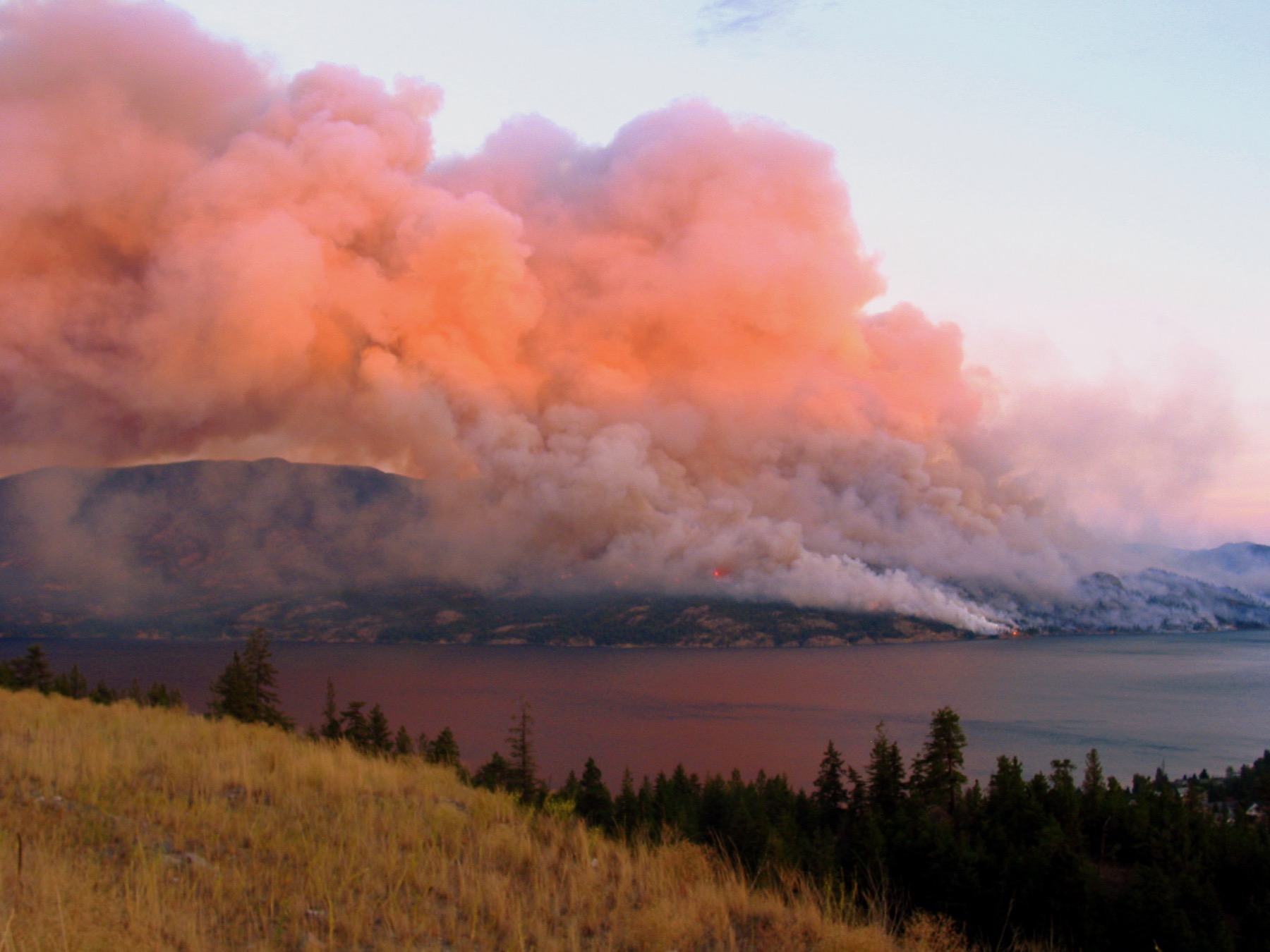
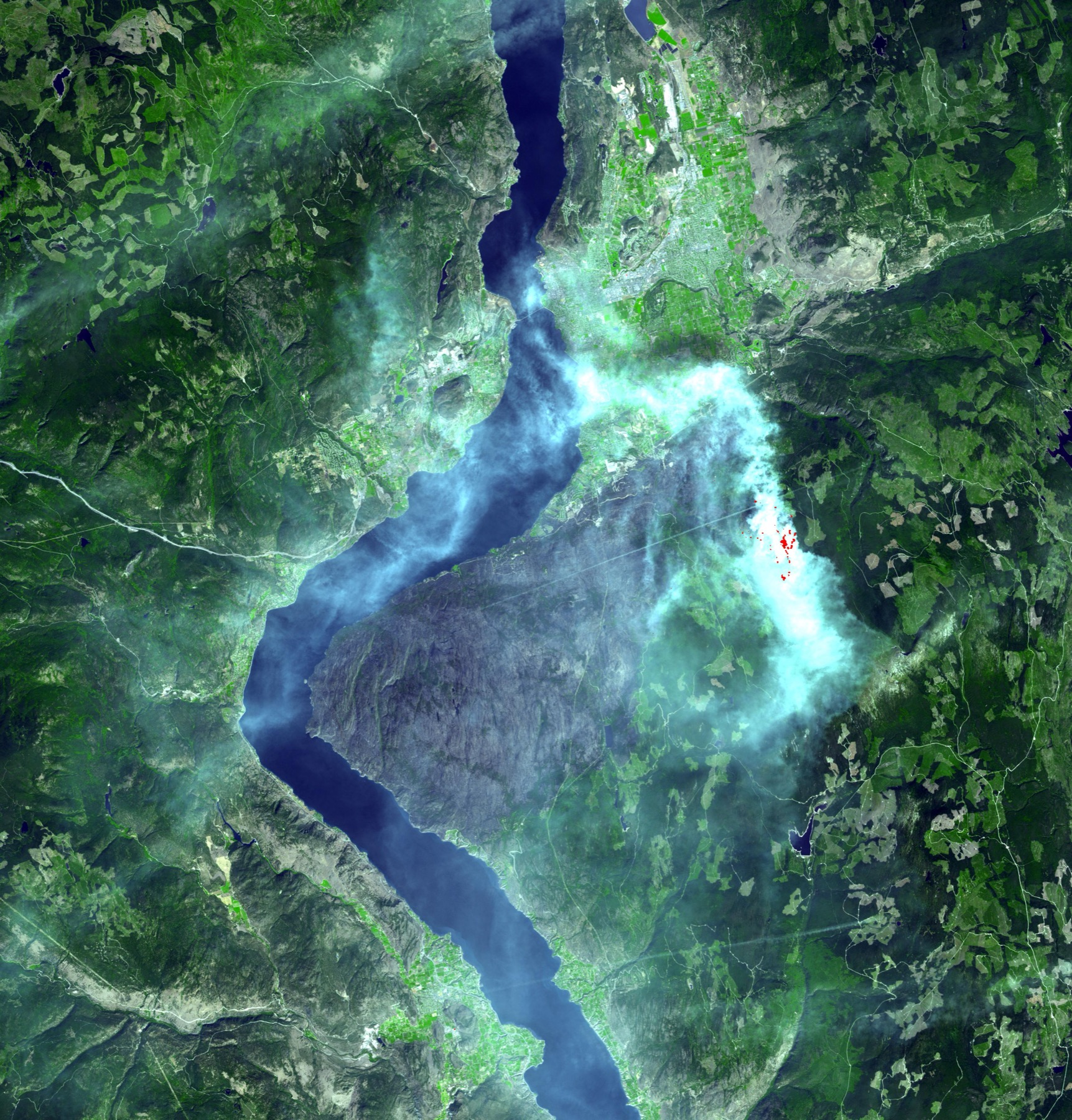
2003 is not one of the lake-elevation analog years, but it is the benchmark severe drought of the modern Okanagan, the year later droughts (like 2009) are compared against, and it shows drought and wildfire compounding.
Local government & infrastructure
- The Okanagan Mountain Park fire (Kelowna area) caused approximately $200 million in damage and destroyed 239 houses, per the province’s Firestorm 2003 Provincial Review; province-wide, Firestorm 2003 interface fires forced evacuation of over 45,000 people, destroyed over 334 homes plus many businesses, and the total cost to BC was estimated at about $700 million. [High] (source)
- The fire’s direct firefighting/response cost is given as $33.8 million (distinct from the ~$200 million total damage estimate), and it burned 25,912 hectares. Response mobilized 60+ fire departments, about 1,400 Canadian Armed Forces troops, and roughly 1,000 forest firefighters plus multiple air tankers. [High] (source)
- The fire destroyed 12 of the 18 historic wooden Kettle Valley Railway trestles in Myra Canyon and damaged 2 steel trestles/bridges. The KVR in Myra Canyon had been designated a National Historic Site shortly before the fire; federal and provincial governments jointly funded reconstruction at a budget of roughly $15 million, with all timber trestles and the two steel bridges rebuilt and the site fully reopened by 2008. [High] (source)
- The District of Summerland declared a state of emergency during the 2003 drought, indicating municipal-level water-supply crisis response in the Okanagan that year. [High] (source)
- Post-fire rains on the burned Okanagan Mountain watershed triggered debris flows and increased sediment loads in creeks draining into Okanagan Lake, degrading water quality through elevated turbidity and nutrient inputs, a recognized drinking-water and infrastructure concern for downstream systems. [Low] (source)
- The Filmon Provincial Review produced 42 recommendations (18 on fire prevention and mitigation), directly shaping subsequent local-government interface-fire and emergency planning across BC including the Okanagan. [High] (source)
Quality of life
- The Okanagan Mountain Park fire forced a mass evacuation of the Kelowna area, reported as roughly 27,000 residents (Wikipedia) up to 33,000 (Firestorm 2003 Provincial Review); the range reflects different source counts for the same event. [High] (source)
- St. Hubertus Estate Winery (established 1928) was destroyed along with the owner’s home and its entire 2003 crop, and many other Okanagan wineries lost crops to smoke taint, a direct agriculture/livelihood loss. [High] (source)
- Tourism during the peak season fell an estimated 30% to 50% below normal as a result of the fire, hitting the Okanagan visitor economy. [Moderate] (source)
- Recreation infrastructure was destroyed or compromised: six marine campgrounds were destroyed, and the Crawford mountain-bike trails and the Kelowna Crags rock-climbing area were compromised. [Moderate] (source)
- Wildfire smoke produced a measurable public-health impact: in the Kelowna region, physician visits for respiratory diseases rose between 46% and 78% above 10-year mean rates for three weeks during the 2003 fire period (peer-reviewed study using BC Medical Services Plan billing data); no similar effect was seen in less-exposed Kamloops. [High] (source)
Environmental flow & fish
- 2003 was a pivotal environmental-flow/fish-management year for the Okanagan: the Fish/Water Management Tool (FWMT), an internet-accessible modelling system to set weekly Okanagan Lake Dam releases balancing flood, drought/irrigation, and sockeye protection, was developed and implemented in 2003-2004, and a conservation-based sockeye hatchery program was initiated in 2003. [High] (source)
- Prior to the 2003-era interventions (adult fish passage re-engineering, side-channel construction, Skaha Lake hatchery outplants, and real-time fish-water management), Okanagan sockeye smolt-to-adult survival was only 1% to 3%, versus 7% to 25% afterward, underscoring the poor pre-2003 baseline these EFN tools addressed. [High] (source)
- Okanagan Lake Dam releases govern Okanagan River flows and the survival of sockeye eggs and young downstream, while the lake’s autumn drawdown must be managed so kokanee do not spawn too high on the gravel shoreline; a low-water drought year like 2003 tightens this trade-off between lake targets and downstream flow needs. [Moderate] (source)
~25,912 ha Okanagan Mtn Park fire
239 Homes destroyed
~$200M Total damage
Sources: www2.gov.bc.ca · en.wikipedia.org · cbc.ca · bcclimatechangeadaptation.ca · grokipedia.com · opentextbc.ca · pubmed.ncbi.nlm.nih.gov · syilx.org · obwb.ca · kelowna.com · obwb.ca · essa.com